
VeganSpots: A Vegan Map That Tells You What to Order
Eating out vegan is often guesswork. A listing says a restaurant has vegan options, and they turn out to be a side salad. A place that closed two years ago is still on the map. The menu changed since anyone last looked, and the one vegan dish is gone.
For over two decades, the answer was HappyCow. But its founder sold it in 2021, and it changed hands again in late 2025 with the management team let go. Since then, it hasn’t kept up, and a listing there is only as fresh as the last person who bothered to update it.
So I built VeganSpots: a vegan map where every place is checked against its own, current menu, tells you what to order, and shows where each detail came from and when it was last checked. It’s free, needs no account, and the data is open.
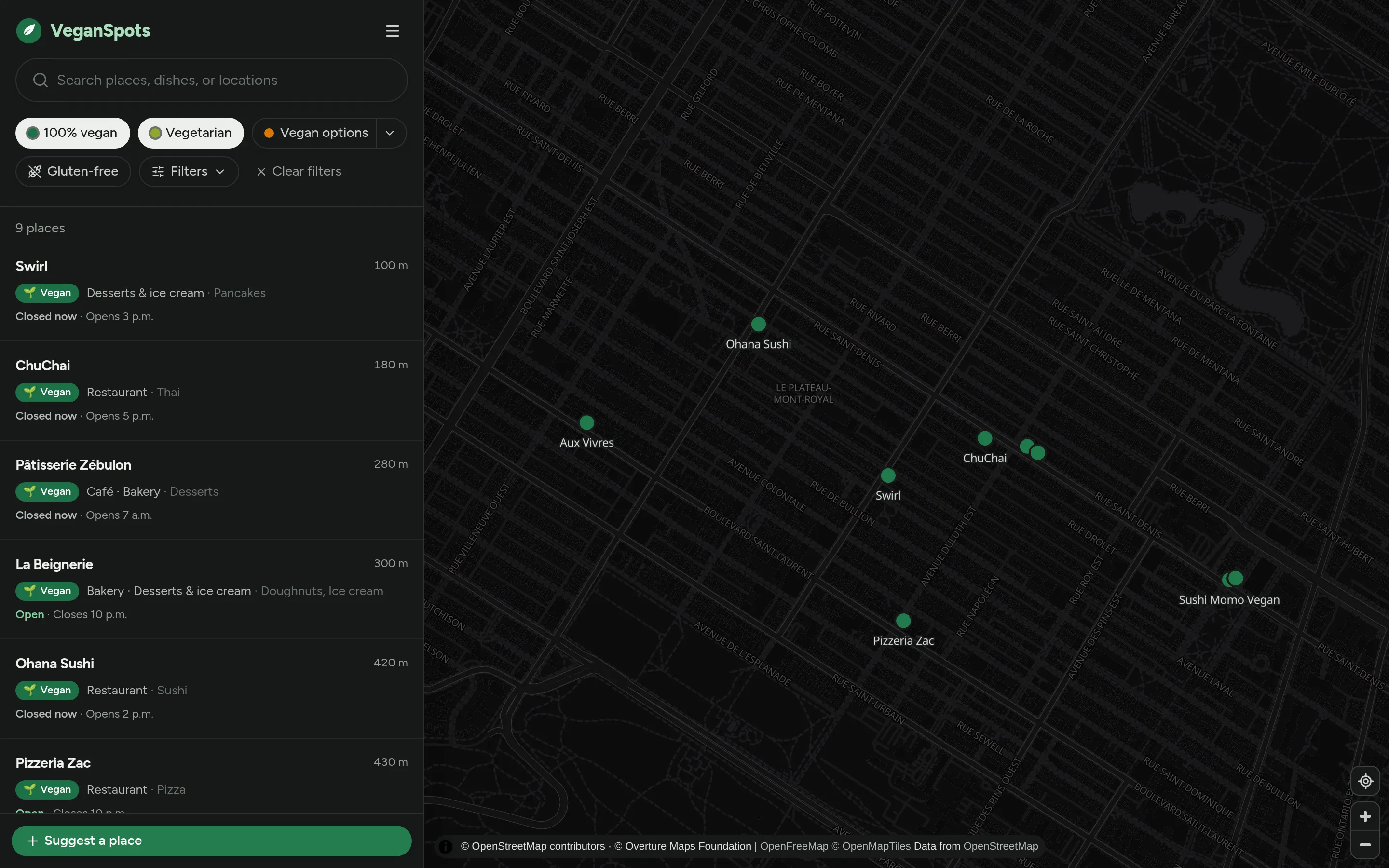
What to order, with sources
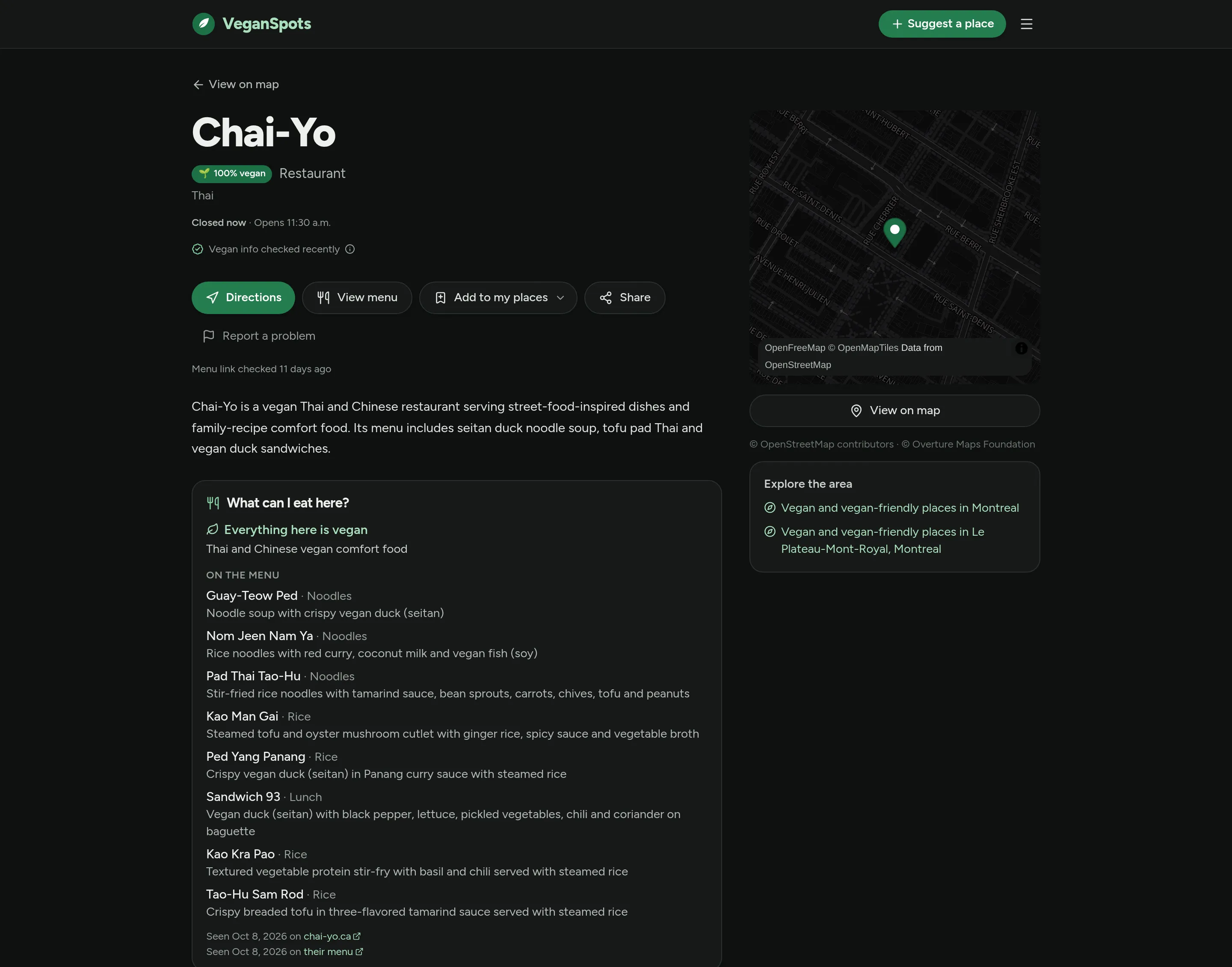
Each place has a vegan level (100% vegan, vegetarian, or vegan options) and a “What can I eat here?” section: what a vegan place serves and its signature dishes, or the vegan meals everywhere else. “Vegan options” means an actual meal, not fries. You can filter the map by level, and there’s a gluten-free filter too.
Every level and every dish is quoted from a source, usually the place’s own site or menu, and the page links to it with the date it was seen.
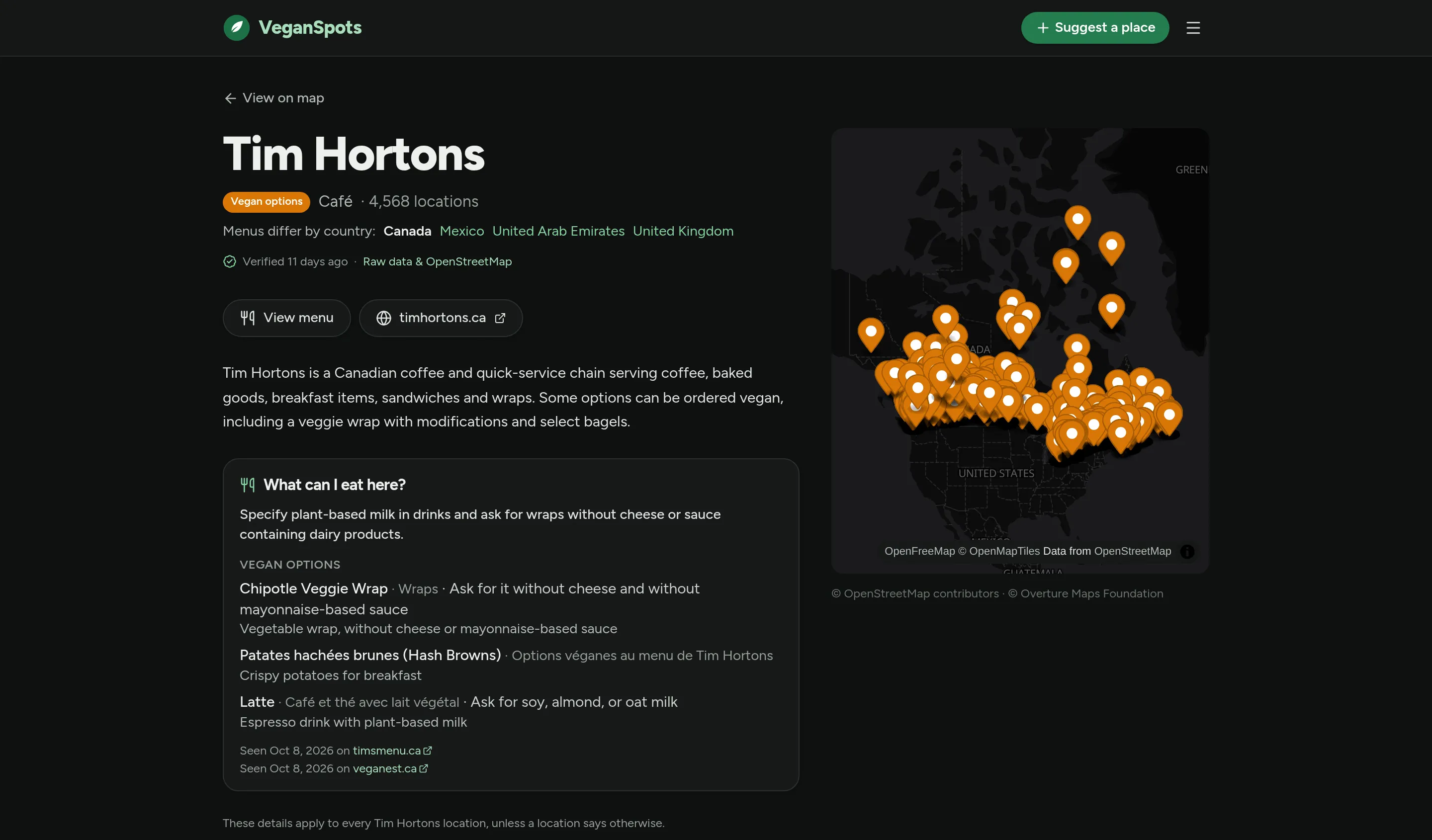
Chains are researched once per country, since menus differ: fries can be vegan in one country and not the next. Every location then shows what to order.
How it works
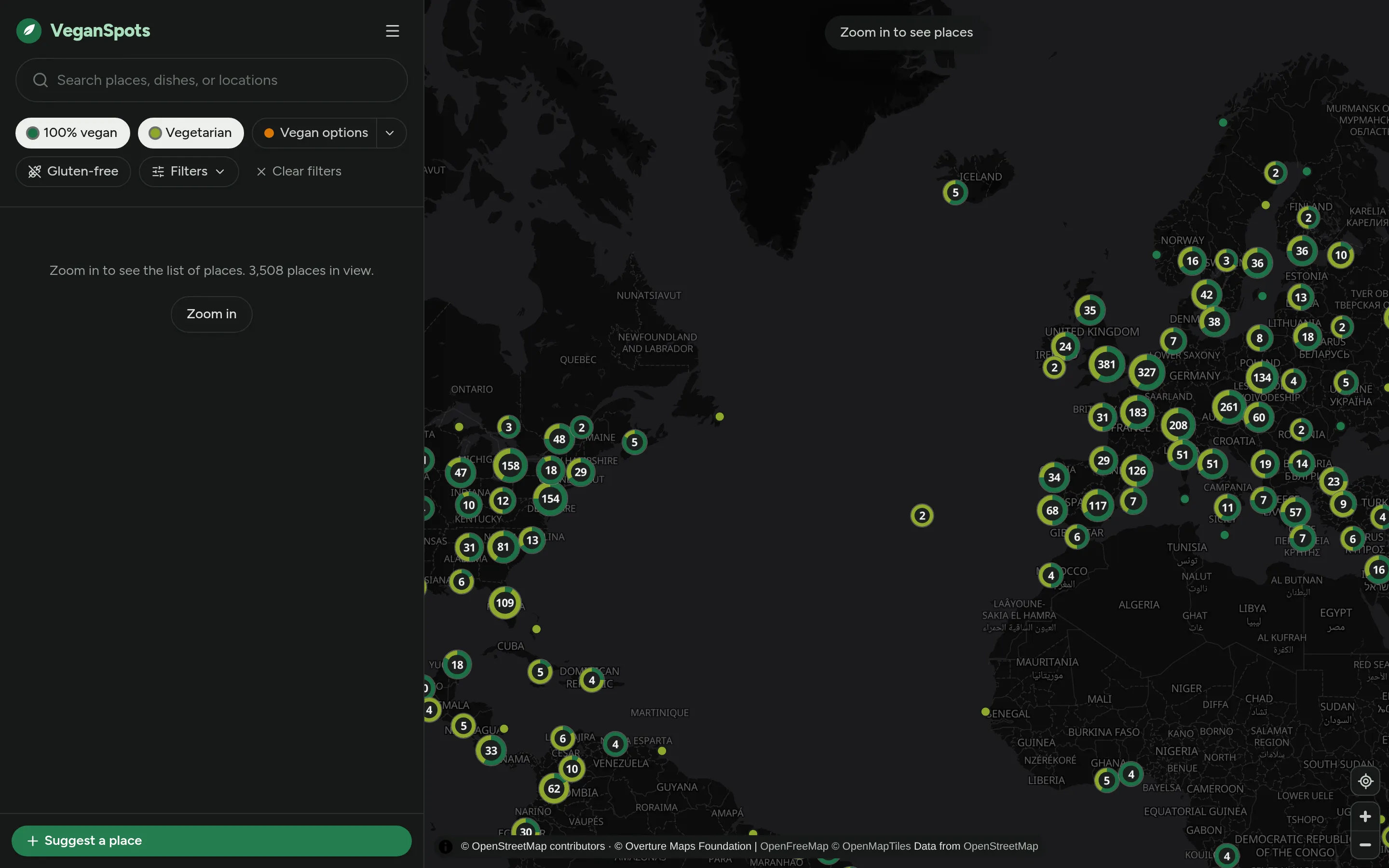
VeganSpots starts from open maps: OpenStreetMap, Overture Maps and city open data. Every place tagged vegan or vegetarian on OpenStreetMap is on the map, from Helsinki to Toronto.
An AI agent then checks each place. It reads the menu, the website and other trusted sources, and settles three things: is it still open, what’s its vegan level, and what can you eat there. When a visitor suggests a place or reports a change, the agent checks it right away.
Getting the details right took the most work. Early on, the agent marked McDonald’s as “nothing vegan” from a menu that listed the McVeggie. Now it has to check every dish that could be vegan, like a veggie burger or a falafel wrap, before it can rule a place out. Most of its rules came from mistakes like that one.
Giving back to OpenStreetMap
The place data is published under the ODbL, and the open data portal shows each field’s source and lists where VeganSpots’ data would improve OpenStreetMap. Anyone can send a fix from there with their own OSM account, one place at a time, each tag checked by the person sending it.
Built in a week
The first commit was on October 3rd. Six days and 224 commits later, it was about 58,000 lines of TypeScript plus tests, written with the help of Claude Code and a lot of steering. A product spec and its decision log (every choice, with the reason, usually with numbers from production) kept it on track, including through a full rebuild of the data import pipeline on day four.
Try it
Open veganspots.org and look up your city. If a place is missing or wrong, suggest it or report it, and the agent will go check. There’s also a Discord for feedback and vegan finds.
Eating out vegan shouldn’t be guesswork. With VeganSpots, you know what you’ll order before you even sit down.

Who am I?
Hello! My name is Cretezy and I am a software developer. I write about programming, personal projects, and more.
See more posts here.